Water Security · Program overview
Water closer to home.
Household rainwater storage, treatment and practical training for hillside communities in Okhaldhunga.
2026 project in progress: 11 planned household systems across five communities, with 4,000-litre storage at each home. Agreed budget: C$20,802.
Read the water-tank case study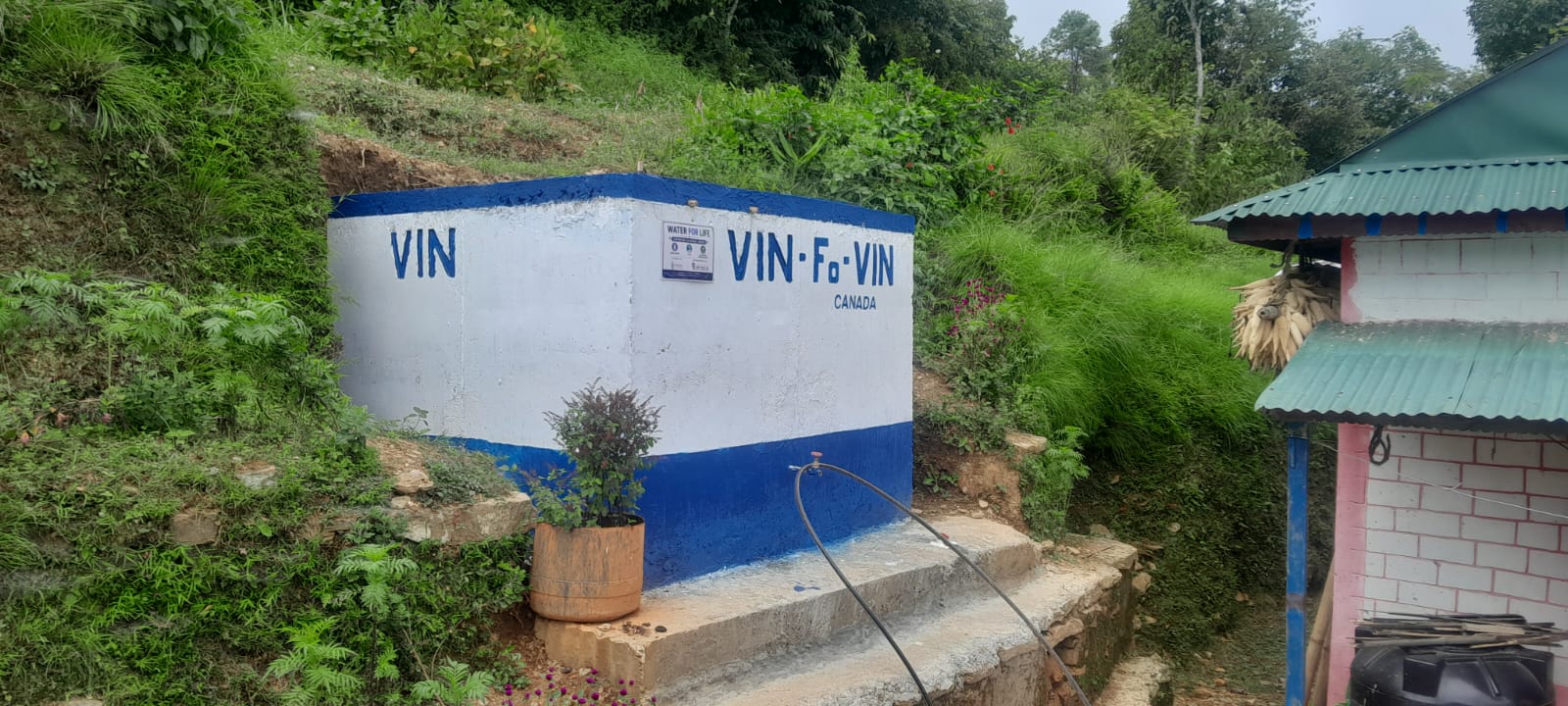
The need
For scattered hillside homes, collecting water can mean a steep walk to a spring or other source and a much harder return with a full container. Rainfall, dry spells and the condition of local sources affect how much water a family can bring home.
Unsafe drinking water can cause illness and interrupt children’s schooling. The World Health Organization explains the connection between water, hygiene and school attendance. This is a reason for including treatment and hygiene education, not a measured health outcome of the 2026 project.
A nearby tank creates a reserve for household use. It can reduce some collection trips and make washing, cooking and gardening easier to manage. The amount available still depends on rainfall, catchment, household demand and maintenance.
What the system includes
The project combines several parts rather than treating storage alone as the answer:
- Roof catchment, screening and first-flush control to collect rainwater.
- A 4,000-litre household tank, tap and washing area.
- Household water treatment and hygiene education.
- A separate greywater settlement tank and a garden connection suited to the site.
- Training in system care and practical food-growing skills.
Water intended for drinking needs appropriate treatment and care. A storage tank by itself does not establish drinking-water safety. The project team describes the current approach as seven-stage filtration with UV treatment.
Who organizes the work?
Friends of VIN Canada provides direction, funding and oversight. VIN coordinates household selection, site checks, materials and technical work in Nepal. Local crews bring masonry and plumbing skills; participating households contribute site knowledge and learn the operating and maintenance routines.
Community input helps identify families according to water access, household circumstances and whether an installation will work at the site. The design needs to fit the slope, roof and space around each home.
Why household-scale work matters
The WHO/UNICEF Joint Monitoring Programme estimates that 2.1 billion people lacked safely managed drinking water in 2024. That global figure explains the wider need; it is not a result or beneficiary count for our project.
Our contribution is a defined local project: storage and treatment close to homes where terrain and distance make water access difficult. Its value will depend on how the systems perform and how families use and maintain them.
Source: WHO/UNICEF JMP, 2025 report, data through 2024.
Following the 2026 project
The agreed scope covers Taluwa, Thulachhap, Narayansthan, Bhadaure and Moli. VIN provides quarterly activity and financial reporting, with the completion report due by the end of January 2027. The case study will be updated with completed installations, final costs and reported household outcomes.
Support our work in Nepal.
Give to Friends of VIN Canada through CanadaHelps. Donations support the charity’s work generally, rather than a particular project.